
}Fast Approval
⛟Free Shipping
Exclusive Deals
ZOnline Prescription

NAD+ Options Starting @ $145/month
- NAD+ Gummy Melts
- Simple Online Process
- Fast Free delivery
4.7 ★★★★⯨
13,663 reviews • Trustpilot

NAD+ Get Started - $199/mth
- Cellular Energy Support
- Free Shipping
- Made in U.S. Pharmacy
4.4 ★★★★⯨
2,825 reviews • Trustpilot

NAD+ Starting @ $79/month
- Restore Your Natural Energy
- Clinician Guided NAD+
- Injections, Spray or Patches
4.4 ★★★★⯨
14,095 reviews • Trustpilot
NAD+ Injections starting @ $169
- Join 50,000+ Patients
- 100% Online
- Discreet Shipping
4.3 ★★★★⯨
2,727 reviews • Trustpilot
NAD+ from $129/mth
- Re-charge Your Body @ the Cellular level
- 1600 mg Doses
- Doorstep Delivery
4.3 ★★★★⯨
500 reviews • Trustpilot

NAD+ 60 count starting @ $35.95
- Variety of Energy Blends
- NAD+ Ultra Sport available
- Stay Strong. Stay Inspired
4.7 ★★★★⯨
47 reviews • Trustpilot

NAD+ Injectible from $149/mth
- Major Insurance accepted
- Cancel Anytime
- FREE Shipping
4.0 ★★★★☆
15 reviews • Trustpilot

Connect with our 180 Specialists Today
- Personalized Plans
- Convenient Video Visits
- Always-on Support
4.3 ★★★★⯨
37 reviews • Trustpilot

NAD+ Therapy starting @ $199/mth
- Licensed U.S. Providers
- Start Your Personalized Journey now
- Discreet Delivery
4.1 ★★★★☆
113 reviews • Trustpilot

$100 OFF NAD+ Promo
- Start Your Journey Today
- Boost Your Mood & Energy
- Accessible, Simple Solutions
4.3 ★★★★⯨
4,521 reviews • Trustpilot
What Is NAD+ and Why Are People Trying It?
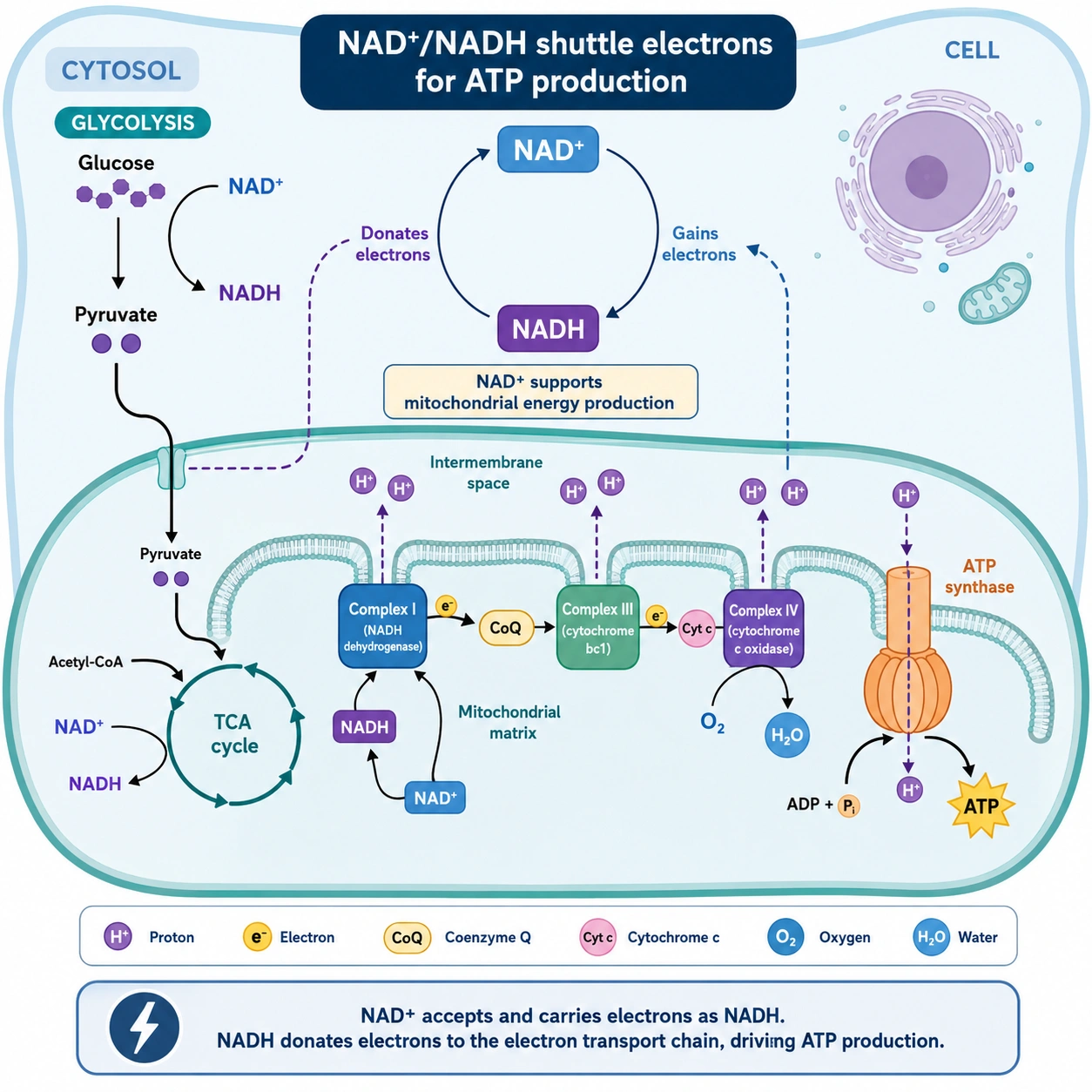
NAD+ (nicotinamide adenine dinucleotide) is a coenzyme your body makes and uses constantly – it’s involved in how your cells convert food into usable energy, and it plays a role in DNA repair and overall cellular function. The catch is that NAD+ levels naturally decline as you age, and that decline is part of why interest in NAD+ therapy has grown so quickly across the wellness space.
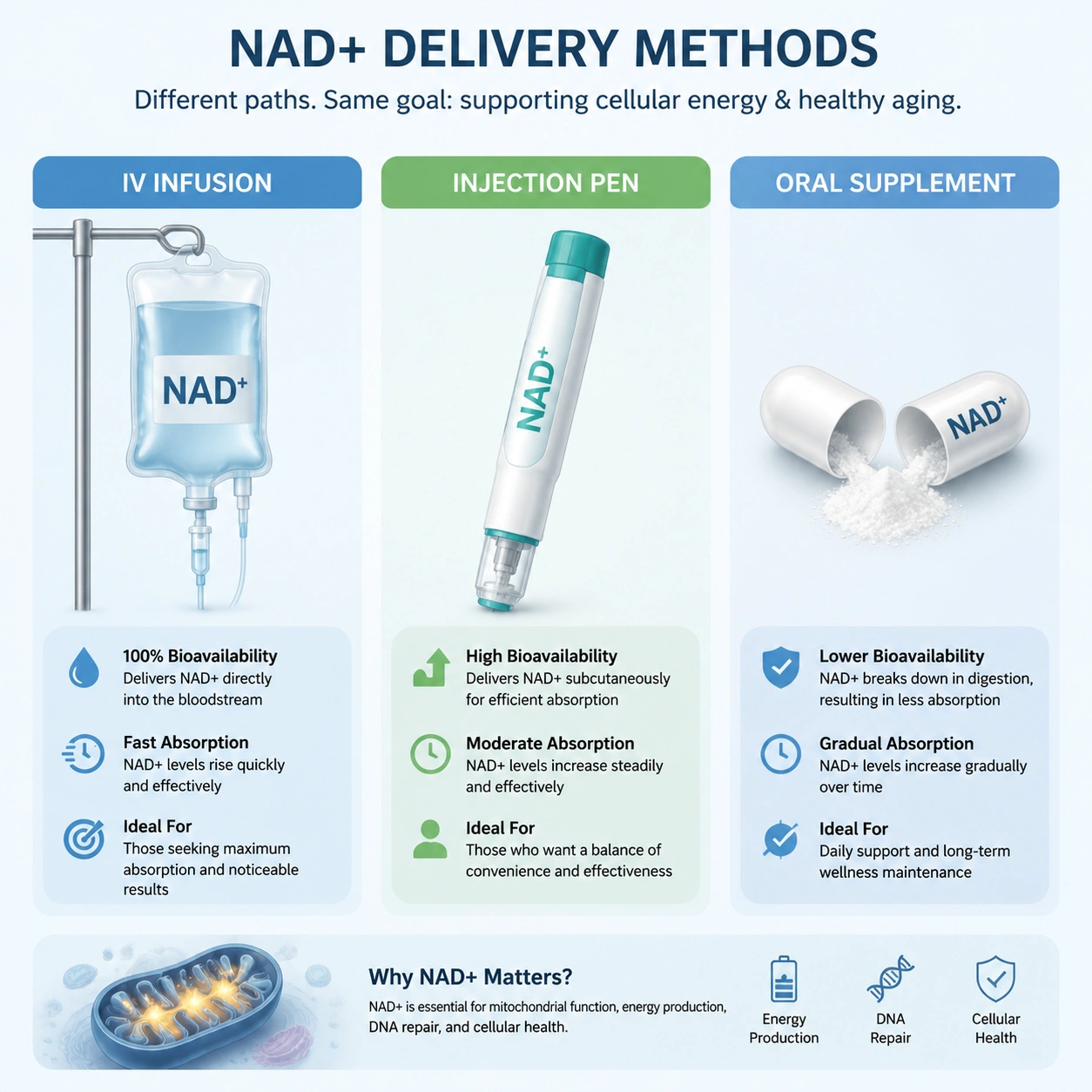
The idea behind NAD+ therapy is straightforward: restore those levels externally, either through an IV infusion, an injection, or an oral supplement, in hopes of supporting the cellular processes that naturally slow down over time. People trying it report a range of goals – more energy, mental clarity, faster recovery after exercise or illness, and general support for healthy aging.
Here’s the important context to know before going further: NAD+ therapy is not FDA-approved for any specific medical condition. It’s offered by clinics under a wellness or off-label framework, not as an approved treatment for a diagnosed disease. That doesn’t mean it’s unsafe or that people don’t find value in it – but it does mean the science is still developing, and any provider worth using should be upfront about that rather than making guaranteed-results claims.
How Is NAD+ Administered?
IV Infusion – NAD+ delivered directly into the bloodstream over the course of 1-4 hours, typically at a wellness clinic or IV therapy center. This is the most common form associated with quicker, more noticeable effects, though sessions take real time and tend to be the most expensive option.
Intramuscular or Subcutaneous Injections – smaller, faster doses given into a muscle or under the skin, often self-administered at home after a provider walks you through the technique. Dosing is typically started low (around 20mg) and gradually increased.
Oral NAD+ Precursors – supplements like NR (nicotinamide riboside) or NMN (nicotinamide mononucleotide) taken by mouth. Some research suggests these precursor forms may be absorbed more reliably than direct NAD+ administration, since intact NAD+ molecules don’t easily cross cell membranes on their own.
There’s genuine debate in the medical community about which method actually works best – some researchers have raised real questions about whether direct NAD+ injection is the most effective way to raise cellular NAD+ levels at all, compared to precursor supplementation. This is worth discussing with your provider rather than assuming IV therapy is automatically superior just because it’s the most expensive option.
What to Expect – Timeline and Realistic Results
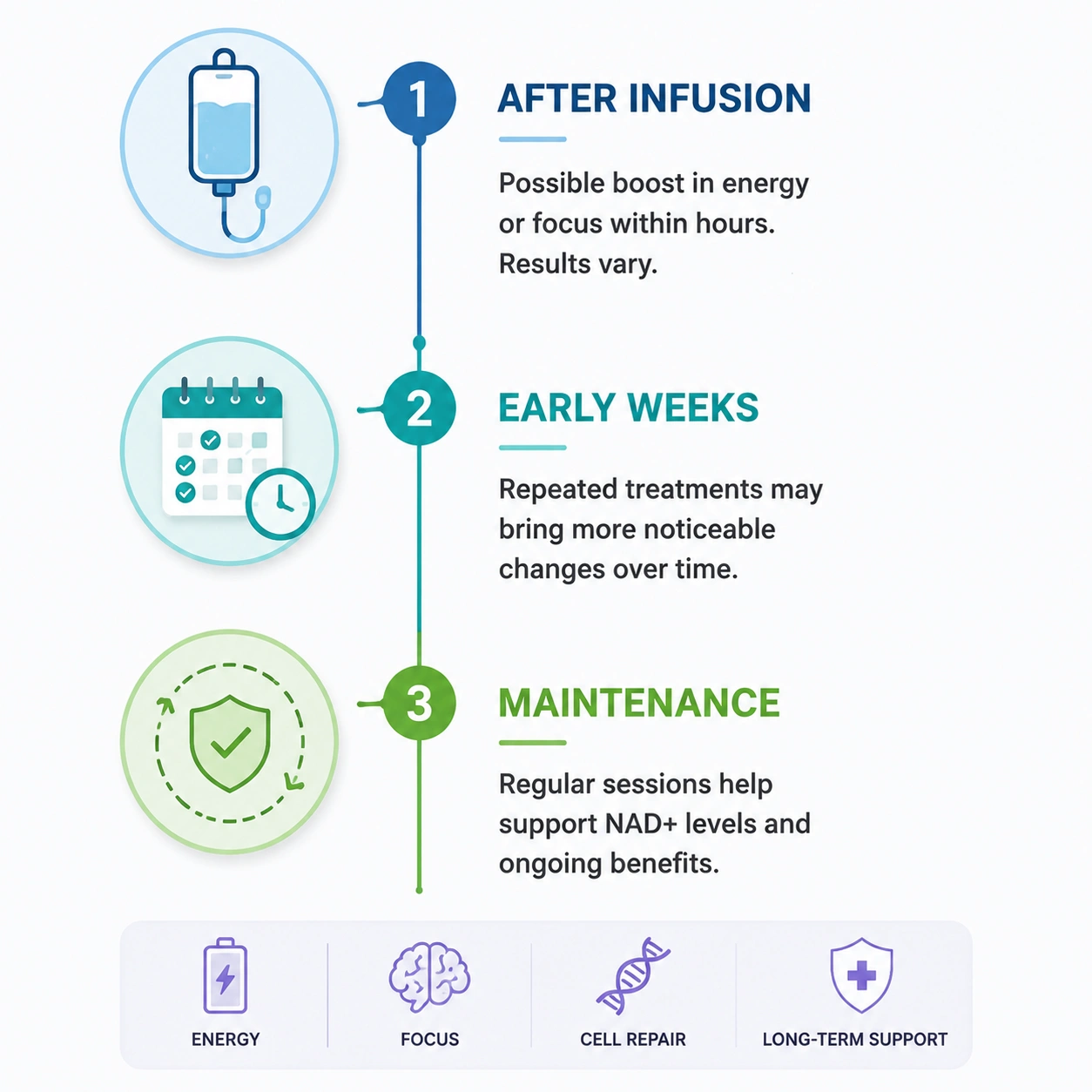
Because NAD+ therapy sits outside the same clinical trial process as FDA-approved medications, there isn’t the same volume of large-scale data to point to for a precise timeline. That said, here’s what’s commonly reported by users and providers:
- During/shortly after infusion: Some people report feeling more alert or energized within hours, though this varies significantly person to person
- First 1-2 weeks: Continued sessions or injections are often when people start noticing more consistent changes in energy or mental clarity, if they notice them at all
- Ongoing maintenance: Most providers recommend a maintenance schedule (weekly injections or periodic IV sessions) rather than a one-time treatment, since NAD+ levels return to baseline over time without continued support
Be realistic: individual response to NAD+ therapy varies widely, and not everyone notices a dramatic difference. Providers who guarantee specific results are a red flag rather than a selling point.

Who Might Consider NAD+ Therapy?
Unlike other medications, NAD+ therapy doesn’t have a formal diagnostic threshold (like a BMI cutoff or a blood testosterone level) that determines candidacy. Instead, most providers evaluate based on your symptoms, health history, and goals – commonly:
- Persistent fatigue or low energy not explained by another diagnosed condition
- Interest in cellular/metabolic wellness support as part of a broader healthy-aging approach
- Recovery support after illness, heavy training, or periods of high stress
- General interest in the wellness space, separate from treating a specific diagnosed disease
A prescription or medical evaluation is still typically required, even though this isn’t a disease-treatment context – a responsible provider will still review your health history and run baseline labs before starting treatment, particularly checking kidney and liver function.
Potential Side Effects
NAD+ therapy is generally described as well-tolerated, especially when dosing is increased gradually, but side effects are worth knowing about upfront:
Commonly reported (especially during IV infusion or with faster dosing):
- Nausea
- Headache
- Flushing or a warm sensation during infusion
- Mild dizziness
Injection-specific:
- Injection site soreness or redness
Most of these effects are described as dose- and rate-dependent – meaning they’re more likely with faster infusions or larger doses, which is part of why providers typically start low and increase gradually rather than jumping straight to a full dose.
This is general information, not medical advice. Because compounded NAD+ products aren’t reviewed by the FDA for safety or quality before distribution, it’s worth discussing your specific health history – including kidney and liver function – with a licensed provider before starting.
Frequently Asked Questions
Is NAD+ therapy FDA-approved?
NAD+ therapy is not FDA-approved for any specific medical condition. It’s offered by clinics under a wellness or off-label framework. This doesn’t automatically mean it’s unsafe, but it does mean the same rigorous approval process used for prescription medications like GLP-1s hasn’t been applied here.
Does insurance cover NAD+ therapy?
Generally, no – since it isn’t FDA-approved for a specific medical condition, most insurance plans don’t cover it, meaning it’s typically an out-of-pocket expense.
How much does NAD+ therapy cost?
Injections typically range from $50-$200 per dose, while IV infusions tend to run higher – often $250-$1,000+ per session, depending on dose and provider.
Is NAD+ therapy safe?
When administered by a licensed provider using pharmaceutical-grade NAD+ and appropriate dosing protocols, it’s generally considered well-tolerated. That said, because it isn’t FDA-regulated the way prescription medications are, the quality and sourcing of the actual product varies significantly between providers – which is exactly why vetting your provider matters here more than in most categories.
Can I use HSA/FSA for NAD+ therapy?
This varies and often depends on whether the treatment is tied to a documented medical condition versus general wellness use – check with your plan administrator directly, since eligibility isn’t guaranteed the way it typically is for prescription medications.
How to Choose a Legitimate NAD+ Provider
Because this space isn’t FDA-regulated the way prescription medications are, vetting your provider matters more here than almost anywhere else on this site.
» Confirm Pharmaceutical-Grade Sourcing
Ask specifically whether the NAD+ used is pharmaceutical-grade, sourced from a licensed compounding pharmacy – not a lower-grade or unregulated source.
» Require Baseline Labs
A responsible provider checks kidney function, liver health, and overall metabolic markers before starting treatment, not just a symptom questionnaire.
» Avoid Guaranteed-Results Claims
Given the limited clinical evidence, any provider promising specific, guaranteed outcomes (“reverse aging,” “cure fatigue”) is overselling what the current science actually supports.
» Check for Licensed Medical Oversight
Treatment should be prescribed and supervised by an actual licensed medical professional, not administered purely as a walk-in wellness service with no medical review.
» Ask About Compounding Pharmacy Transparency
Since compounded NAD+ isn’t FDA-reviewed, a legitimate provider should be willing to name their pharmacy source and answer questions about quality control.
Red Flags:
No baseline labs required, guaranteed or exaggerated results, unwillingness to disclose the NAD+ source, or pricing that seems dramatically cheaper than the market rate (often a sign of lower product quality).
thenadlist.com is a free online resource that offers reviews and comparisons of companies and the products and services they provide. All representations and warranties regarding the accuracy of the information are disclaimed. Company trademarks featured on our site are the property of their respective trademark holders and listings on our site do not imply endorsement. thenadlist.com does not claim to represent every available company, product, or service existing in the market as a whole.
thenadlist.com may receive compensation from the companies featured on this site. All forms of rankings, evaluations, reviews, and opinions featured on this site are determined internally and subjectively. The thenadlist.com team works hard to keep site information up to date, but all information is presented “as is” and should not be assumed accurate.
All users of this site are subject to the site’s “Terms of Use.”